Loft tank leaks cause ceiling damage
A cracked tank or a stuck ballcock can overflow for hours before anyone notices, and the water always finds the ceiling below before it finds you.
Water tanks & cylinders · Peterborough & Cambridgeshire
Cold water storage tank and hot water cylinder replacement — vented or unvented, G3 qualified — for homes with weak pressure, a leaking loft tank, a dead immersion heater, or a cylinder that has simply reached the end of its life.
76 Checkatrade reviews · Gas Safe registered 540834 · quotes usually back within one working day.
G3 qualified
Unvented hot water cylinders
76 reviews
Verified on Checkatrade
1-year guarantee
On all workmanship
£5m / £10m
Public & employers' liability
Since 2012
Family-run, team of four
What it is
Most older Peterborough houses still have a cold water storage tank in the loft feeding a hot water cylinder in an airing cupboard below it — a vented system. Newer builds and many refurbished homes have moved to unvented cylinders, which take mains pressure directly and deliver strong flow to every tap and shower at once, with no tank in the loft at all.
Both systems fail in predictable ways over time: tanks corrode, crack or overflow; cylinders develop pinhole leaks in the copper or the coil scales up and stops heating properly; immersion heaters burn out; and pressure drops as pipework, valves and ballcocks age. None of it is dramatic until the day water is coming through a bedroom ceiling.
We replace cold water storage tanks, vented hot water cylinders and unvented hot water cylinders, along with the immersion heaters, valves, ballcocks and pipework that go with them. Unvented cylinder work is G3 qualified — it is a legal requirement, not an optional extra, because these are sealed pressure vessels.
Every engineer is City & Guilds / NVQ qualified and the business is Gas Safe registered under 540834, with £5m public liability and £10m employers' liability insurance. We are a family-run team of four working out of Peterborough — the person who quotes your job is the one who turns up to do it.
Tank and cylinder jobs are usually quoted as a fixed price after we have seen the installation, so you know the cost before anything is touched. Quotes are free and usually back within one working day.
A leaking or damp loft tank
Staining on the loft hatch, damp insulation, or water tracking down through a ceiling below the tank — often the first sign a cold water tank has failed.
Weak or inconsistent hot water pressure
A shower that dribbles when someone else runs a tap, or hot water that never quite reaches the pressure the cold side manages.
An old vented cylinder due replacement
Copper cylinders typically last 10–15 years. Past that, corrosion and pinhole leaks become a matter of when, not if.
Switching to unvented for mains pressure
Households wanting strong, even pressure at every outlet at once, and happy to free up loft space by removing the tank altogether.
A dead or unreliable immersion heater
No hot water when the boiler is off, tripping the electrics, or an element that has simply given up after years of scale build-up.
What happens if it waits
Tanks and cylinders sit out of sight in a loft or airing cupboard, so problems are often ignored until they force themselves onto a ceiling or a floor.
A cracked tank or a stuck ballcock can overflow for hours before anyone notices, and the water always finds the ceiling below before it finds you.
A copper cylinder corroding from the inside out can weep for weeks inside an airing cupboard, rotting the floor and shelving before it is visible.
A failed expansion vessel, a stuck relief valve or water discharging from the tundish is a safety issue on a sealed pressure system, not routine wear.
Limescale on a cylinder coil slows heat transfer, so the boiler runs longer to heat the same amount of water, and the cylinder never quite recovers between uses.
A failing element or thermostat can trip an RCD repeatedly or, in the worst case, present a genuine electrical hazard inside a cupboard full of water.
Uninsulated pipework and tanks in a cold loft lose heat constantly, and in a hard winter an unlagged tank can freeze and split.
Our process
01
We check the tank, cylinder, immersion, valves and pipework to find out whether this is a leak, a scale problem, a pressure issue or genuine end-of-life failure.
02
We explain whether a like-for-like replacement, an upgrade to unvented, or a repair is the right call, and quote it as a fixed price agreed before work starts.
03
Water and, where relevant, electrics are isolated, the system drained down safely, and the old tank or cylinder removed without damage to the loft or cupboard around it.
04
New tank or cylinder fitted and connected, including immersion heater, valves, ballcock, expansion vessel and discharge pipework for unvented systems, all to current regulations.
05
System refilled, pressure and temperature tested, relief valves and tundish checked on unvented systems, and the work covered by our 1-year guarantee.
What you get
A correctly sized cylinder and clean pipework mean hot water that actually keeps up with the household, at pressure, when it is needed.
A new tank with a working ballcock and sound overflow removes the risk that has been sitting quietly above your ceilings.
Unvented cylinder installation under our G3 qualification gives strong pressure at every outlet without the loft tank taking up space.
A clean cylinder coil and correctly set thermostat heat water efficiently instead of the boiler running longer than it needs to.
A properly wired, correctly rated immersion heater gives you hot water even if the boiler is ever out of action.
Gas Safe registered 540834, £5m public liability, £10m employers' liability, and a 1-year workmanship guarantee on everything we fit.
Recent work
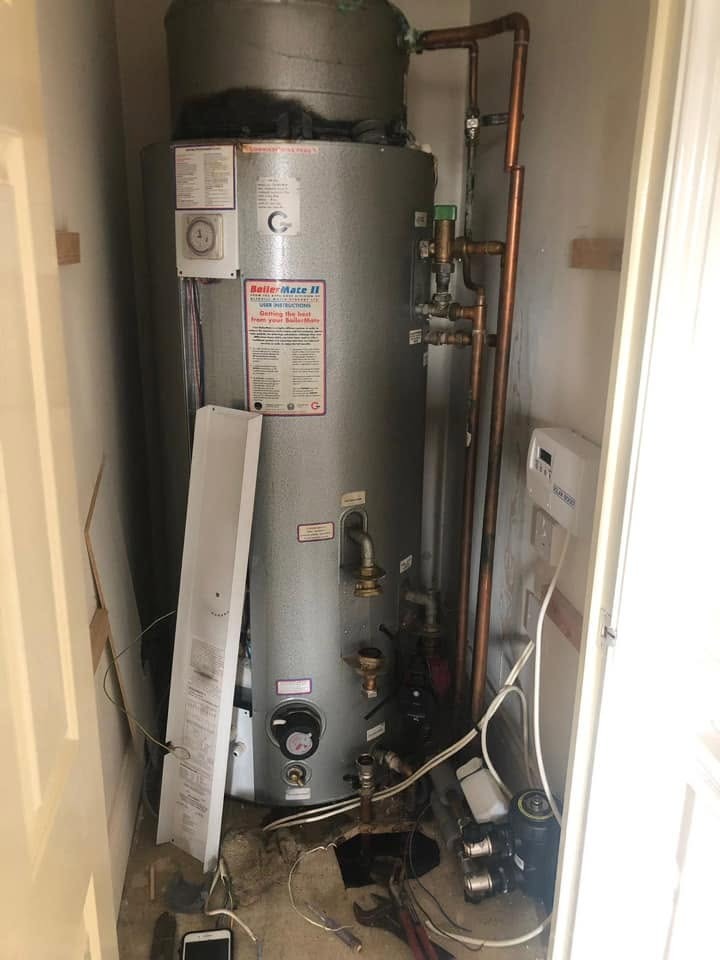
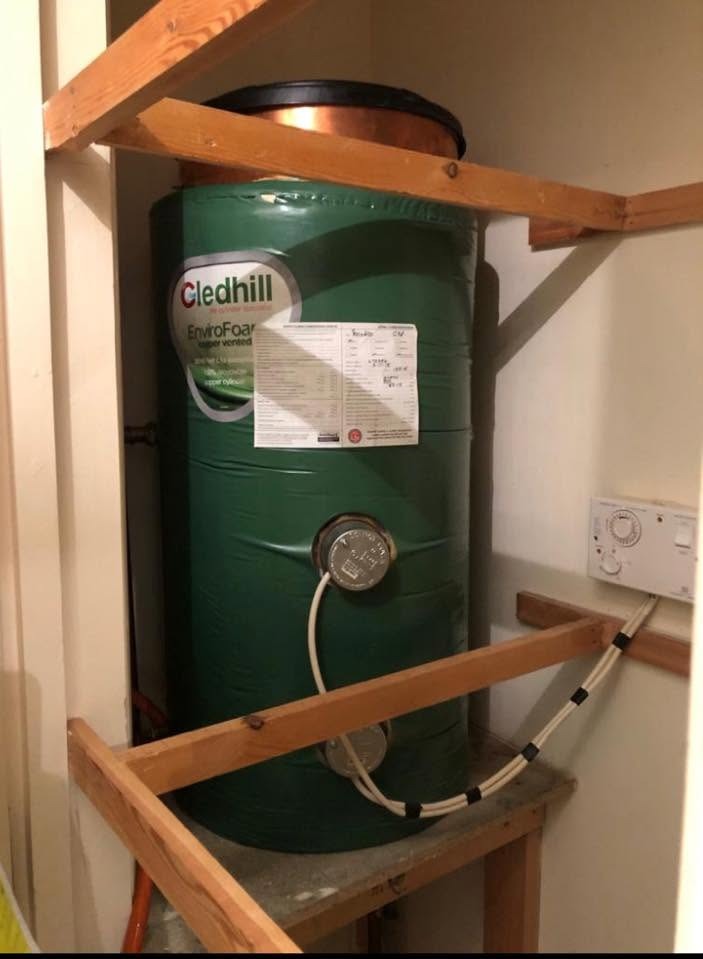
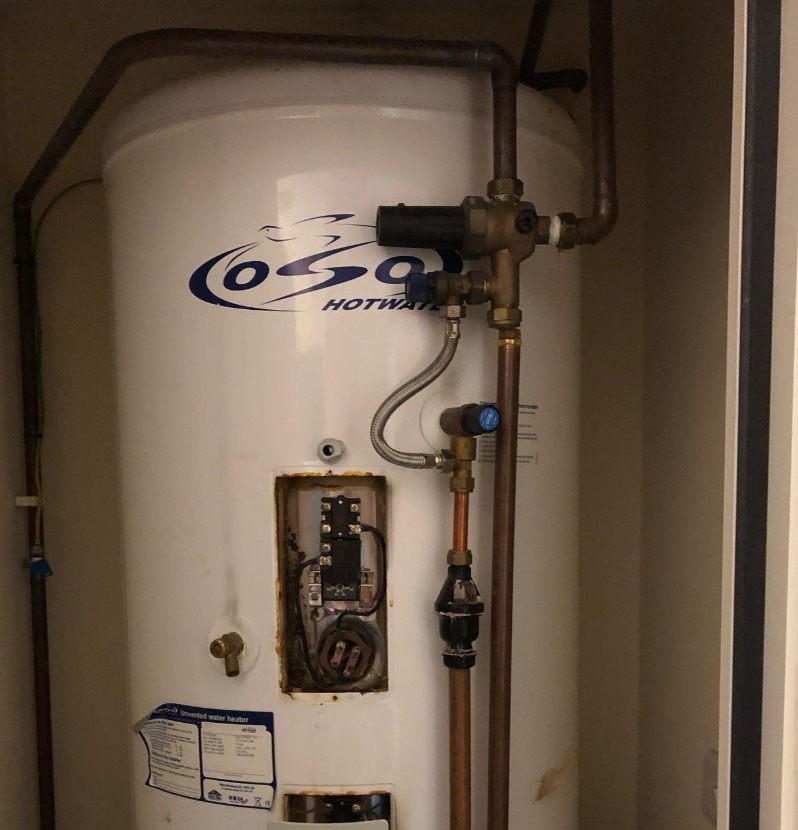
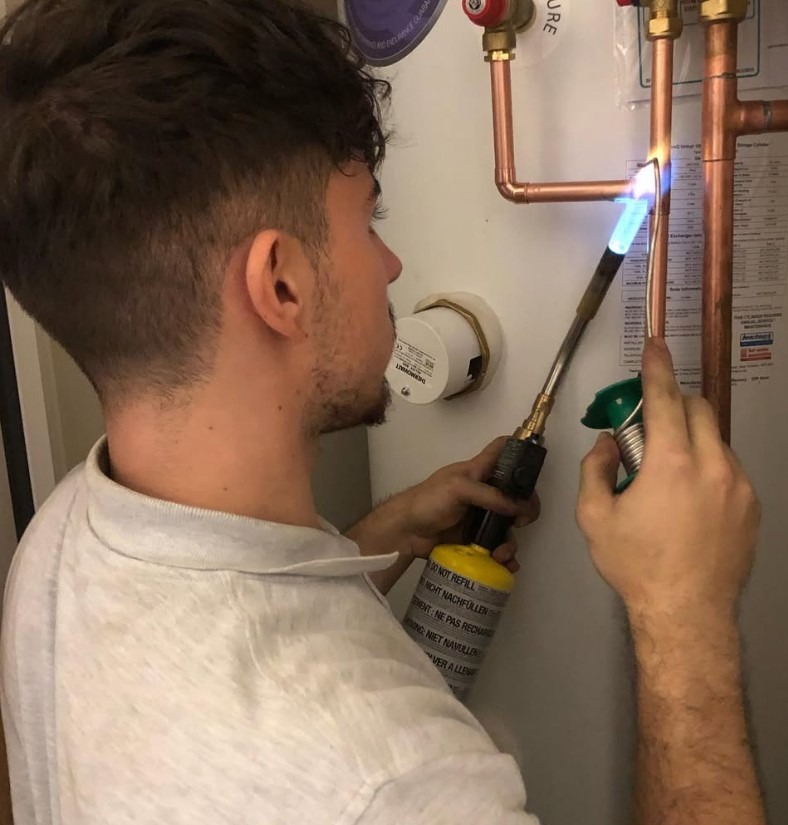
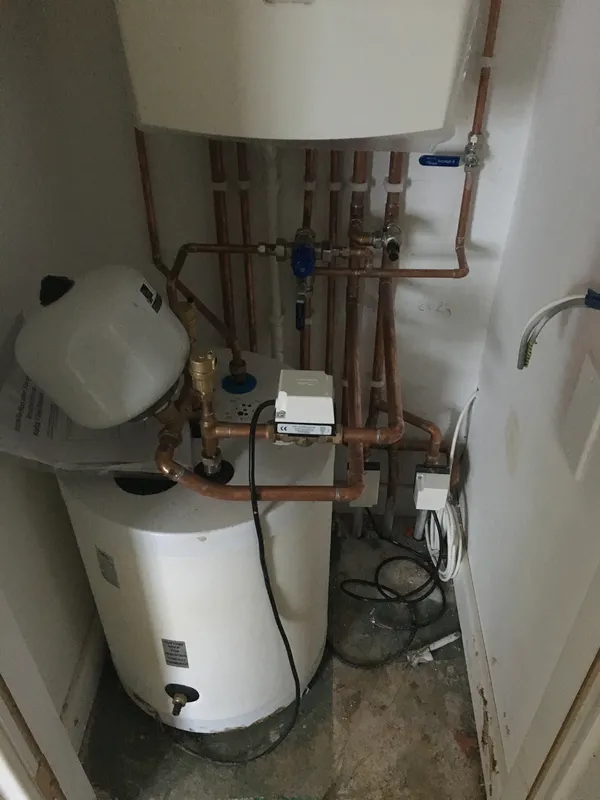
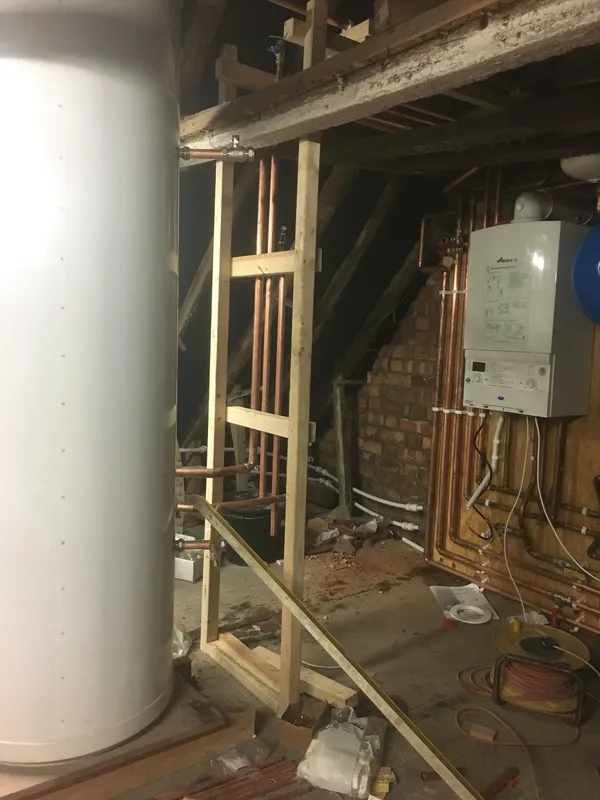
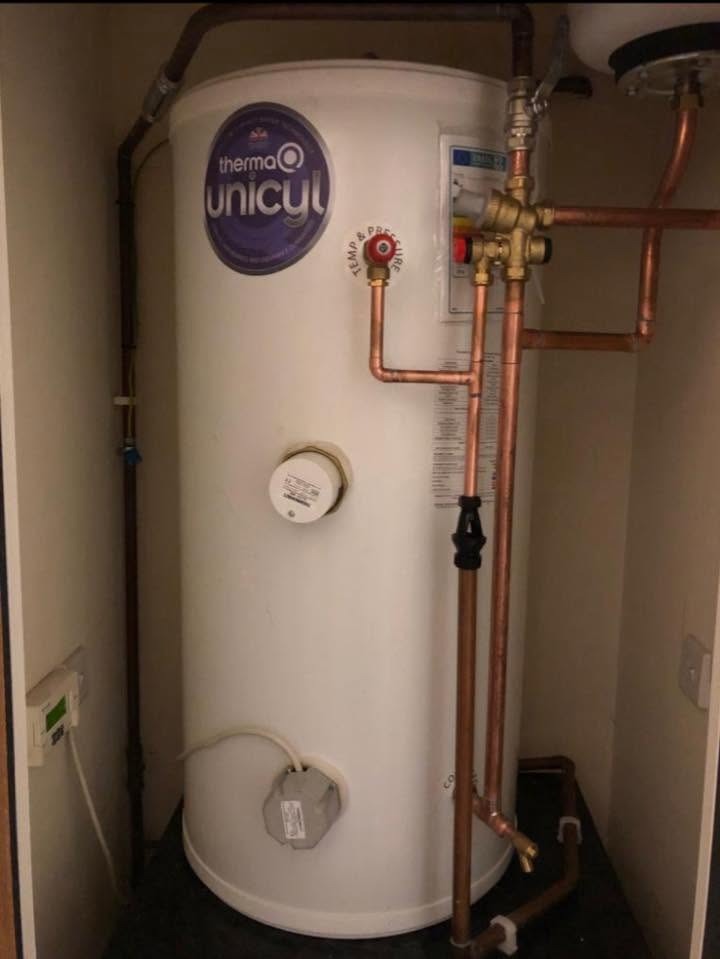
In detail
Water storage and hot water delivery cover several distinct components. Here is what each one involves and when replacement is the right call.
Loft cold water tanks are usually plastic these days, but many older properties still have ageing galvanised steel tanks that are corroding from the inside. We replace failed tanks with correctly sized, insulated, lidded plastic tanks fitted with a working ballcock and a properly routed overflow.
Replacement is also the moment to fit proper support boarding, insulation to prevent freezing, and a lid to keep debris and light out — all of which reduce future problems rather than just swapping like for like.
Vented cylinders rely on the cold tank above for their feed and work at relatively low pressure, but they are simple, reliable and cheaper to install than unvented systems. We replace failed copper cylinders with new insulated cylinders sized correctly for the household, along with the immersion heater and any valves that have also reached the end of their life.
A cylinder that has never had a jacket loses heat constantly. New cylinders come factory-insulated, which alone can noticeably cut the standing heat loss compared with an old, thinly lagged tank.
Unvented cylinders take water straight from the mains and store it under pressure, delivering strong, even flow to every outlet in the house at once, with no cold water tank required. They are sealed pressure vessels, and installing or servicing one without the G3 qualification is illegal.
The installation includes the cylinder itself, the expansion vessel, the temperature and pressure relief valve, and the tundish and discharge pipework, all sized and routed to the current regulations. Common faults we are called out to are water discharging from the tundish, hot water running out faster than expected, and a vessel that has lost its charge and needs re-pressurising or replacing.
Switching from vented to unvented is a common upgrade during a bathroom refit or loft conversion, since it frees up the loft space the tank used to occupy and improves shower pressure throughout the house.
Immersion heaters sit inside the cylinder and heat the water directly using electricity, either as a backup to the boiler or as the main source of hot water in some households. Elements fail from age, from scale build-up in hard water areas, or from a faulty thermostat cycling incorrectly.
We replace immersion elements and thermostats, check the wiring and rating are correct, and advise on whether an economy-tariff setup makes sense for the household rather than leaving an oversized or badly timed immersion running unnecessarily.
Weak hot water pressure on a vented system is often down to tank height, undersized pipework, a partially closed valve or scale restricting flow. On an unvented system it is more likely to be a failing pressure-reducing valve, an incoming mains issue, or an expansion vessel that has lost its charge.
We diagnose which it is rather than guessing, because the fix for a height and pipework issue is completely different from the fix for a mains-pressure system fault, and the wrong repair wastes your money.
Leaks from tanks and cylinders are usually corrosion, a failed ballcock, a split expansion vessel or a perished joint. We trace the actual source before replacing anything, then make good the immediate area — checking joists, boarding and insulation for water damage while we are already up there.
Where a leak has been running for a while, we will flag any damp or timber damage we can see so it can be dealt with before it becomes a bigger job than the tank or cylinder itself.
We carry out tank and cylinder work across Peterborough, Yaxley, Hampton, Whittlesey, Huntingdon, Sawtry, Stilton, Stamford, Market Deeping, Ramsey, Oundle and the surrounding Cambridgeshire towns.
Free, no-obligation quote
Tell us what the tank or cylinder is doing, whether it's vented or unvented, and your postcode. Quotes are free, usually back within one working day, and the price is agreed before any work starts.
07863 776312Gas Safe registered 540834 · £5m public liability · 1-year workmanship guarantee
Common questions
It depends on whether it is a like-for-like vented cylinder, an upgrade to unvented, or a straightforward tank swap. We quote as a fixed price after seeing the installation, agreed with you before any work starts. Quotes are free and usually back within one working day.
Copper cylinders typically last 10–15 years, plastic cold water tanks longer if insulated and lidded properly. Corrosion, scale and general wear mean most will eventually need replacing rather than repairing.
In most homes, yes. It removes the need for a loft tank and gives strong, even mains pressure at every outlet. We assess your incoming mains pressure and flow first to confirm it is suitable, then carry out the installation under our G3 qualification.
Yes. We hold the G3 qualification legally required for unvented hot water cylinders, alongside Gas Safe registration 540834 and City & Guilds / NVQ qualifications across the team.
On a vented system this is usually down to tank height or pipework sizing. On an unvented system it points to a pressure-reducing valve or expansion vessel fault. We diagnose which before quoting any repair.
Treat it as urgent. A leaking loft tank can cause serious ceiling damage quickly. Call us and we will get someone out to assess and, where needed, isolate the supply to stop further damage while a replacement is arranged.
Often, yes, if the cylinder itself is sound. We check the cylinder condition first so you are not paying for a new element in a cylinder that is about to fail anyway.
A clean, correctly insulated cylinder with a working coil and thermostat heats water more efficiently than a scaled, poorly insulated old one, which does reduce the gas used for hot water.
A straightforward like-for-like swap is typically completed in a day. Upgrading to unvented, or work requiring pipework changes, can take longer depending on access and what else needs altering.
Yes — a 1-year workmanship guarantee on everything we do, with manufacturer warranties on the tanks and cylinders we install.
Where we work
We cover Peterborough and the surrounding Cambridgeshire towns from our base at 3 Nightingale Drive. See the full areas we cover or call to check your postcode.
Related services
Gas Safe registered 540834, G3 qualified for unvented cylinders, 1-year workmanship guarantee.
We use essential cookies to run this site, plus optional ones for our quote form, chat and reviews. See our cookie policy.