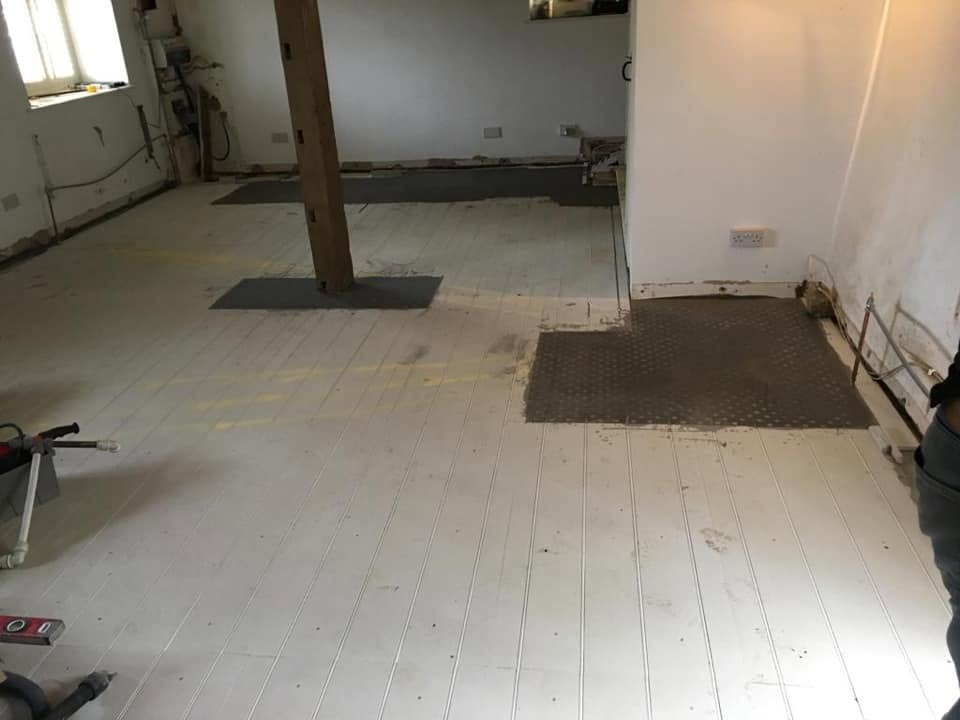
A leak that's slow, not sudden
Gas leaks are often small and gradual rather than dramatic. A faint smell that comes and goes can still mean gas is escaping into a void, under a floor or behind a wall.
Gas checks & capping · Peterborough & Cambridgeshire
A one-off gas safety check, a tightness test, or capping off a gas supply you no longer use — carried out by Gas Safe registered engineers with a quote usually within one working day.
Gas Safe registered 540834 · 76 Checkatrade reviews · family-run in Peterborough since 2012.
1 working day
Typical quote turnaround
76 reviews
Verified on Checkatrade
Gas Safe 540834
Registered engineers
£5m / £10m
Public & employers' liability
Since 2012
Family-run, team of four
What it is
Not every gas job is an annual certificate or a boiler breakdown. A lot of what we do is one-off: a homeowner who can smell something not quite right near the cooker, a kitchen fitter who needs a gas point disconnected before units go in, or a house with an old gas fire in a room nobody has used in years and a pipe behind the fireplace that nobody's touched since. This page covers that middle ground — checks, tests and capping work that fall outside a routine service or a landlord certificate.
A gas safety check is exactly what it sounds like: an inspection of an appliance, a pipe run, or a whole installation, carried out by a Gas Safe registered engineer, to confirm it is safe and tell you plainly if it is not. A tightness test is a specific, measurable check of the pipework for leaks, using a gauge rather than a guess. Capping off means permanently sealing a gas supply that is no longer connected to anything, so a length of live pipe isn't left behind a wall, under a floor, or dangling where a cooker or fire used to be.
This work comes up constantly around kitchen refits, house renovations, appliance removals, house moves and reported gas smells. It's rarely urgent enough to be a full emergency call-out, but it isn't something to leave either — a suspected leak or an uncapped supply is exactly the kind of thing that turns into a serious problem if it's ignored.
We quote most of this work on the job rather than off a fixed price list, because a tightness test on a straightforward domestic supply is a very different job to capping four redundant points in a house that's had three kitchens in thirty years. What doesn't change is the response: we usually get a quote back to you within one working day, and Gas Safe registered engineers do the actual work.
Homeowners who can smell gas
A faint smell near an appliance, under a floor, or outside near the meter that needs investigating properly rather than ignored.
Kitchen and bathroom fitters
Trades who need a gas point safely disconnected or capped before units go in, and reconnected once the new appliance is fitted.
Homeowners removing an old gas fire
A gas fire coming out as part of a renovation, with the supply behind it needing to be capped off correctly, not just turned off at a tap.
People buying or selling a house
An old cooker point, a disused fire, or an unidentified pipe found during a survey or renovation that needs checking and dealing with.
Anyone unsure about existing pipework
Visible gas pipework that looks old, has been disturbed by other trades, or was never signed off by anyone qualified.
What happens if it waits
None of this work is glamorous, which is exactly why it gets left. An uncapped supply or an unexplained smell sitting quietly in a house is a bigger risk than most people realise, because gas problems don't always announce themselves loudly.
Gas leaks are often small and gradual rather than dramatic. A faint smell that comes and goes can still mean gas is escaping into a void, under a floor or behind a wall.
When an old fire, cooker or heater is taken out without the supply being capped properly, what's left is a live gas pipe with nothing safely stopping it — sometimes just a loosely fitted plug.
A cap fitted by someone without the right training or fittings can look fine and still not hold pressure. It has to be tested, not just tightened.
An appliance or flue issue that's never been picked up because no certificate or check has ever been carried out on it produces a gas you cannot see or smell yourself.
Kitchen fitters, builders and electricians disturb gas pipework during other work more often than people think. Anyone not Gas Safe registered altering or disconnecting it is against the law and a genuine safety risk.
An unresolved gas issue, or evidence of amateur work on a gas supply, can complicate a house sale or an insurance claim if something goes wrong later.
Our process
01
A smell, an old appliance coming out, a kitchen fitter needing a point disconnected — describe the situation and we'll tell you straight away if it's a same-day matter or something we can schedule.
02
A Gas Safe registered engineer inspects the relevant pipework or appliance, identifies exactly what's live, what's redundant, and what (if anything) is wrong.
03
A gas tightness test on the pipework using a proper gauge, not a guess — this confirms whether there's a leak and roughly where it sits if there is one.
04
Redundant supplies are capped with the correct fittings and re-tested to confirm they're gas-tight. Any fault found is explained in plain English and quoted before we touch it.
05
You get a clear explanation of what was found and what was done. Any work carried out is covered by our 1-year workmanship guarantee.
What you get
Send us the details and we'll get back to you quickly with a price, rather than leaving you waiting to find out if it's even worth booking.
We test pipework with a gauge and give you a definite answer, which matters when the question is 'is this safe or not'.
Redundant supplies are capped with the right fittings and tested afterwards, so nothing is left half-sealed behind a wall or under a floor.
We regularly work alongside kitchen fitters and builders, disconnecting and later reconnecting gas points at the right stage of the job.
If a check turns up a fault, the same Gas Safe registered engineers can repair it or quote a replacement, rather than passing you to someone else.
Gas Safe registered 540834, City & Guilds / NVQ qualified engineers, £5m public liability and £10m employers' liability.
In detail
This kind of work comes in a few recurring forms. Here's how each one is usually handled.
If you can smell gas strongly and it's persistent, that's a National Gas Emergency Services call (0800 111 999) before anything else — turn off the supply at the meter if it's safe to do so and don't use switches or naked flames. What we deal with is the less clear-cut version: an occasional or faint smell, one that seems to come from a specific appliance or area, or one that's been checked before with nothing found.
We inspect the appliance, the connections and the visible pipework, and carry out a tightness test on the installation to see whether it's holding pressure as it should. Where the source is a specific fitting or joint, we can usually pinpoint and repair it on the same visit.
Gas fires get removed as part of renovations far more often than they get replaced, and the supply behind them is often the last thing anyone thinks about. Capping it off properly means fitting an approved cap to the pipework at a safe point, not just leaving the isolation valve shut, and pressure-testing the result to confirm it's gas-tight.
This is usually a short job on its own, and one we can often do at the same time as capping other redundant points in the same property if there are several — an old cooker point in a previous kitchen layout, for instance.
Before a kitchen refit, the existing gas cooker or hob point usually needs disconnecting so units and worktops can go in, and either capping off (if gas cooking isn't returning) or leaving safely isolated ready for reconnection once the new appliance is fitted.
We work directly with kitchen fitters and builders on timing — disconnecting at the start of the job and coming back to reconnect and test the new appliance once it's installed, so the fitter isn't held up and nothing gets left unsafe in between.
Moving a cooker to a different wall, extending a supply to a new appliance position, or re-routing pipework as part of a renovation all count as gas work and have to be carried out and tested by a Gas Safe registered engineer.
We assess the existing run, plan the alteration, carry out the work and pressure-test the finished installation before anything is connected and used.
Not every check is an annual certificate. Homeowners sometimes want a one-off inspection after buying a house with unfamiliar gas appliances, after other trades have worked near gas pipework, or simply for peace of mind. We inspect appliances, pipework, ventilation and flues and give you a plain-English report of what we found.
This is a genuinely useful, low-cost way to get an independent view of an installation you didn't fit and don't fully know the history of.
We carry out gas checks, tightness tests and capping work across Peterborough, Yaxley, Hampton, Whittlesey, Huntingdon, Sawtry, Stilton, Stamford, Market Deeping, Ramsey, Oundle and the surrounding Cambridgeshire towns.
Free, no-obligation quote
Tell us what's going on — a smell, an old fire coming out, a kitchen fitter needing a point disconnected — and we'll get back to you with a quote, usually within one working day.
07863 776312Gas Safe registered 540834 · £5m public liability · 1-year workmanship guarantee
Common questions
It depends on access and how many points need capping, so we quote on the job — usually within one working day of hearing the details.
No. Turning off an isolation valve isn't the same as capping. A redundant supply should be permanently capped with the correct fitting and pressure-tested to confirm it's sealed.
If the smell is strong or persistent, call the National Gas Emergency Service on 0800 111 999 first. For a faint, occasional smell, we can inspect and pressure-test the installation to find out what's going on.
Yes — we regularly work alongside kitchen fitters, disconnecting the supply before the job starts and reconnecting and testing the new appliance once units are in.
A test using a gauge connected to the installation to check whether the pipework is holding pressure correctly, confirming whether there's a leak in the system rather than guessing from a smell.
Yes. We can inspect any unidentified or disused pipework and either confirm it's already safely capped or cap it off properly if it isn't.
No. Any work on a gas supply, including capping it off, has to be carried out by a Gas Safe registered engineer. It's against the law otherwise, as well as a genuine safety risk.
Yes. If you want an appliance, pipework run or whole installation checked outside of an annual certificate, we can inspect it and give you a plain-English report.
We usually respond with a quote within one working day. For anything urgent, such as a suspected leak, tell us on the phone and we'll prioritise accordingly.
We explain exactly what's wrong in plain English, quote the repair, and only carry it out once you've agreed. The same Gas Safe registered team can handle the fix directly.
Where we work
We cover Peterborough and the surrounding Cambridgeshire towns from our base at 3 Nightingale Drive. See the full areas we cover or call to check your postcode.
Related services
Gas Safe registered 540834, tightness testing done properly, and a quote back to you within one working day.
We use essential cookies to run this site, plus optional ones for our quote form, chat and reviews. See our cookie policy.